
Flood Cleanup in Fountain Hills
Published September 1, 2026 · Last reviewed September 1, 2026 · Water Fighters Restoration
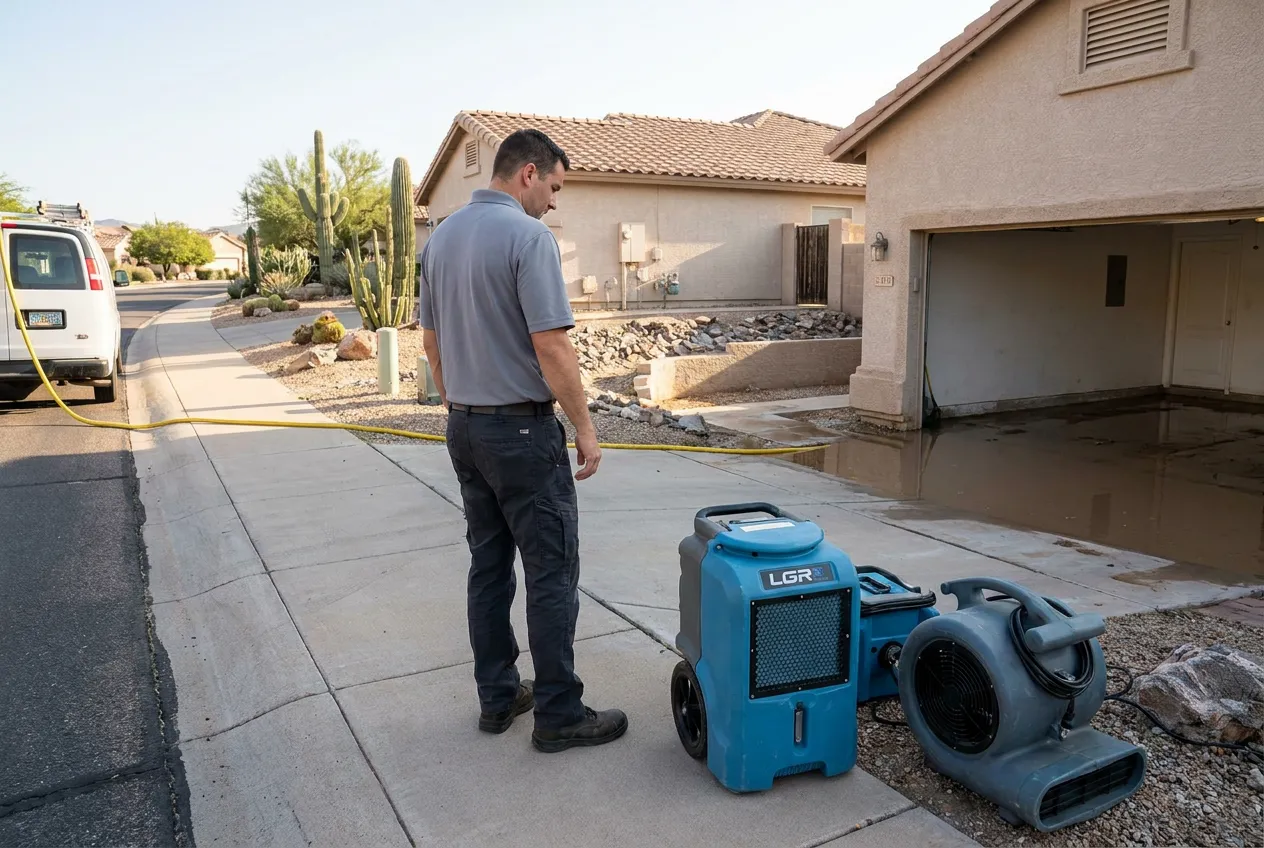
A shallow sheet is moving down the street, but it gathers speed before it reaches the driveway. In Fountain Hills, slope changes what a few inches of runoff can do.
When the flow has stopped, the Fountain Hills water damage restoration page covers structural drying and repairs. Use this page while water is standing or moving.
What to do right now in Fountain Hills
- Stay out of downhill flow. Do not walk or drive through a wash, flooded dip, or fast street runoff. Depth and pavement condition are hard to see.
- Avoid electrical contact. Keep away when water reaches exterior outlets, pool equipment, appliances, cords, or panels. Shut off power only from dry access.
- Close a failed supply line when safely reachable. Use the fixture valve or main for indoor supply water. Do not enter runoff to reach it.
- Keep occupants and pets clear. Water from a wash, street, ground surface, or drain backup is Category 3.
- Photograph uphill and downhill. From a dry point, record the wash or street route, culvert or inlet, threshold, indoor line, and affected rooms. Call Water Fighters Restoration at (602) 884-5325. Open 24 hours, 7 days, with the promise on-site within an hour.
Steep grades turn depth into speed
Fountain Hills drains across slopes descending from the McDowell Mountain edge. Gravity moves water quickly from upper streets and lots toward washes and lower crossings.
That speed can carry rock, soil, branches, and landscape material into a drainage opening. It can also push water through a garage seal that would resist slower ponding on a flat lot.
Do not judge moving water only by depth. A shallow flow on a steep street can affect balance, vehicle control, and the surface beneath it.
The monsoon flood guide explains why a small storm footprint can produce concentrated runoff. The emergency flood cleanup hub covers the first-hour response.
Ashbrook Wash and Cloudburst Wash carry local stormwater
Ashbrook Wash and Cloudburst Wash are two named drainage corridors in Fountain Hills. Floodplain studies have mapped how those routes move water through the town.
The washes may appear dry between storms. Their flood role begins when rainfall reaches the upstream drainage area, not when a homeowner sees water at the nearest crossing.
A tributary or steep street can deliver runoff to the main wash after the hardest local rain has passed. Keep clear of the channel until flow and public restrictions have ended.
Culverts and inlets collect the same material the storm moves
Fountain Hills routes stormwater through streets, gutters, catch basins, washes, culverts, and retention areas. Debris at a culvert can reduce the opening and raise water on the upstream side.
The town has identified debris at Ashbrook Wash culverts as a condition that can contribute to flooding. That does not make submerged clearing a homeowner task.
Do not reach into flowing water or stand at the downstream opening. Photograph the blockage from a dry location and notify the responsible public agency.
Downhill entry can affect more than the first room
Water entering an upper driveway or patio can continue toward lower rooms. It may move through a stair wall, under continuous flooring, or along a stepped slab.
Fresh silt on a landing and a dark line at the lower baseboard can be parts of the same loss. The moisture map should follow elevation as well as room boundaries.
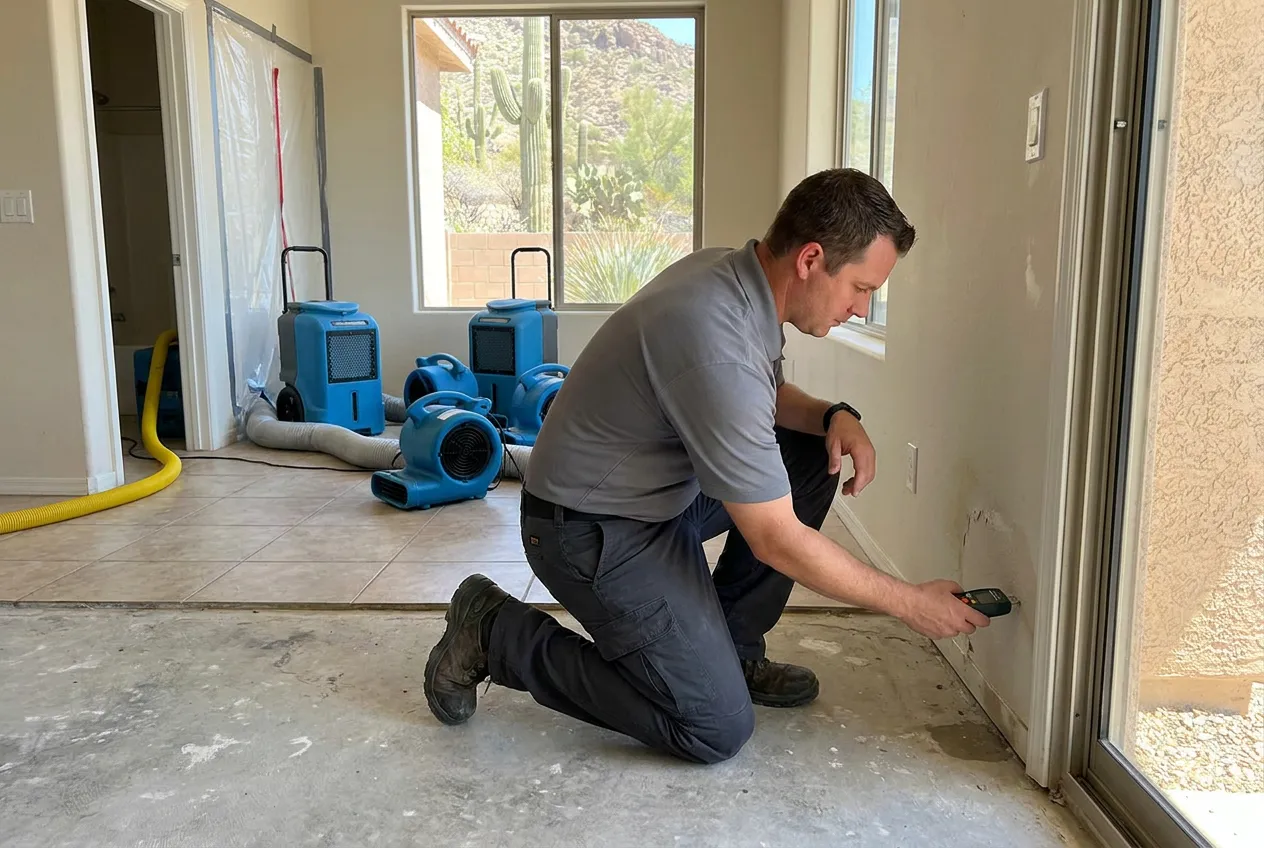
Outside water is Category 3. Controlled cleanup includes extraction, evaluation of exposed porous material, cleaning of retained surfaces, and structural drying.
Water Fighters Restoration handles mitigation and rebuild with one team. The restoration service page explains how the drying record becomes the repair scope.
Water Fighters Restoration is IICRC Certified 70192944 · AZ ROC 324471 · ROC 324468 · EPA Lead-Safe Certified Firm · Licensed, Bonded & Insured.
Insurance asks whether water crossed the ground or entered through damage
Most homeowners policies exclude rising-water flood losses, while rain entering through a storm-created opening may be evaluated differently. Document the uphill route, opening, and water line with the coverage guide and claim guide.
Common Questions
Why can shallow runoff be dangerous on a steep Fountain Hills street?
Slope increases speed and force. The water can also hide loose rock, a damaged shoulder, or a culvert edge even when its visible depth seems modest.
Do Ashbrook and Cloudburst washes need permanent water to be flood hazards?
No. They are stormwater routes and may be dry between events. Upstream rainfall can activate them quickly during a monsoon.
Should a homeowner clear debris from a flowing culvert?
No. Current, suction, unstable footing, and hidden openings make that hazardous. Photograph the condition from dry ground and report it.
Can water entering an uphill room reach a lower level?
Yes. It can follow walls, floor transitions, stairs, and stepped slabs downhill. The Fountain Hills restoration page covers the resulting scope.